
 Available in US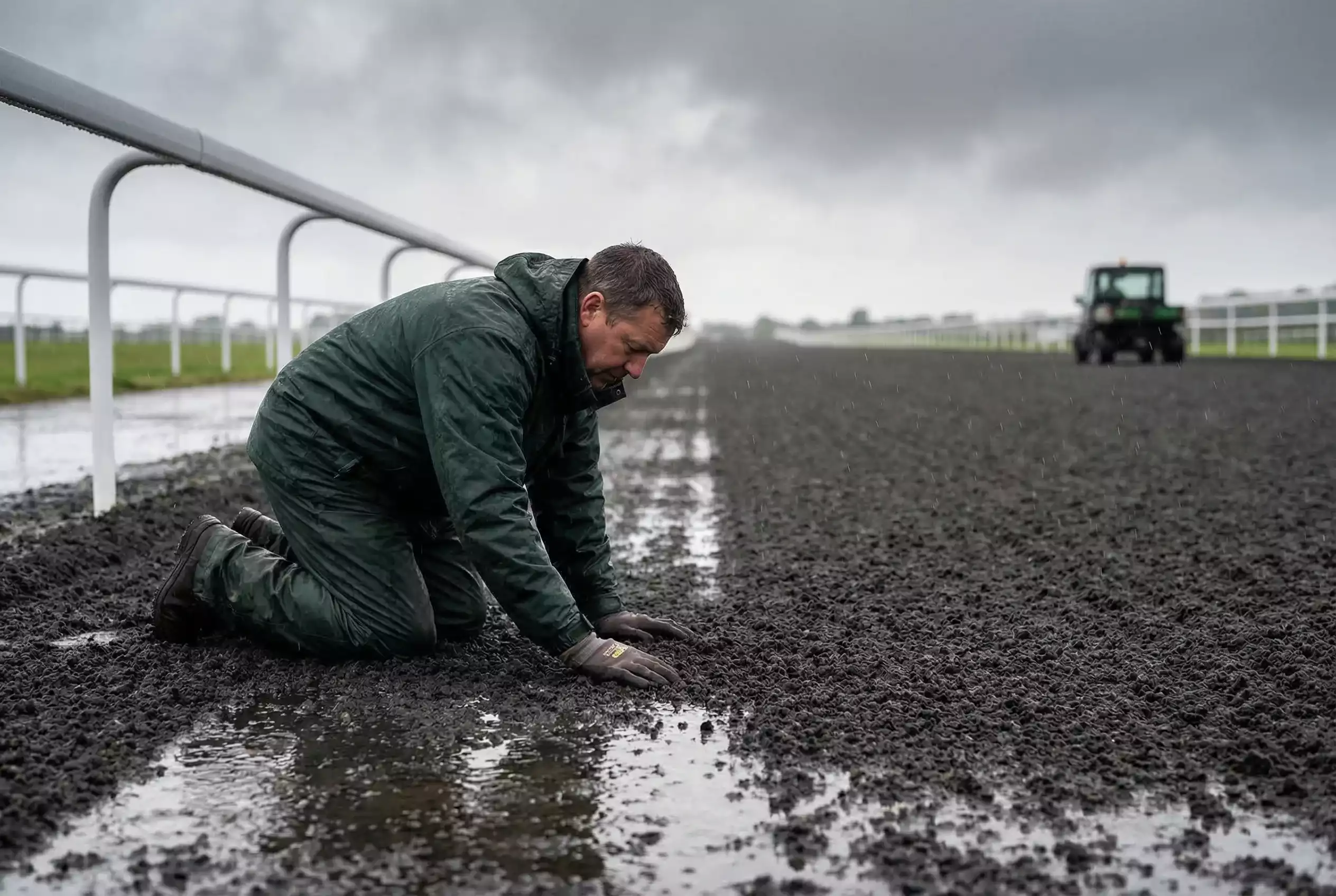
The Southwell going report is one of the most stable in British racing — and that is precisely what makes the exceptions worth paying attention to. On the Tapeta all-weather surface, the going description at Southwell reads “Standard” on the vast majority of race days. It is not turf, where the going can swing from good to heavy between one meeting and the next. But Tapeta is not impervious to weather, and the moments when the going shifts — even slightly — have a measurable impact on results. Southwell Going Report — More on this topic at southwell race results.
Understanding how Tapeta responds to rain, frost and heat at Southwell is a practical skill, not an academic one. The surface was refurbished in 2024 after the 2023 floods, which means the current iteration is relatively young and well-maintained. Its behaviour in different weather conditions is documented but still being mapped by the form-analysis community.
What ‘Standard’ Means on Tapeta
On turf, the going scale runs from firm through good to soft and heavy, with each step representing a significant change in how the ground rides. On Tapeta, the range is narrower. The default description is “Standard,” which indicates that the surface is performing within its designed parameters: consistent grip, minimal kickback, predictable drainage and a pace that reflects the distance and class of the race rather than the state of the ground.
Standard going on Tapeta at Southwell is roughly equivalent to good-to-firm on turf in terms of the speed it produces. Horses move through the surface with minimal resistance, and the times recorded on Standard Tapeta are faster than anything the old Fibresand surface delivered at any going description. ARC Chief Executive Martin Cruddace described Tapeta as offering “a number of benefits regarding its safety record, relative lack of kickback and fairness for horses” — and the consistency of the Standard going is central to that fairness claim. When the surface is Standard, no horse is disadvantaged by where it races on the track or by the conditions underfoot.
The going at Southwell can shift to “Standard to Slow” after persistent rain. This is the Tapeta equivalent of good-to-soft on turf: the surface retains more moisture, the drainage system takes longer to clear the water, and horses expend marginally more energy with each stride. The difference between Standard and Standard to Slow is not dramatic — nothing like the gulf between good and heavy on turf — but it is enough to add a second or more to finishing times over a mile, and to favour horses with stamina reserves over those relying purely on speed.
In rare cases, the going may be described as “Slow,” indicating that the surface is significantly wetter than its designed operating range. This is uncommon on well-maintained Tapeta and is typically associated with sustained heavy rainfall or, in extreme cases, the kind of flooding that struck Southwell in 2023. When the going is Slow, the race dynamics shift noticeably: early speed becomes less of an advantage, and horses that stay on strongly through the final two furlongs tend to outperform their expected finishing positions.
Weather Effects: Rain, Frost and the 2023 Flooding Lesson
Rain is the most frequent weather variable at Southwell. Light to moderate rainfall has a minimal effect on the Tapeta: the surface drains efficiently, and meetings typically proceed without a change to the going description. Heavy or prolonged rain is where the going starts to move. If it has rained continuously for twenty-four hours or more before a meeting, the going will often be described as Standard to Slow, and the race times will reflect the additional effort required.
Frost is handled differently. Tapeta is more resistant to frost than turf because the wax component of the surface prevents water from freezing as readily within the upper layer. Southwell can race through mild frosts that would cause a turf meeting to be abandoned. In severe frosts, the racecourse deploys frost covers — insulating sheets laid over the surface overnight — to maintain temperatures above freezing. There have been occasional abandonments due to frost at Southwell, but they are significantly rarer than at turf venues in the same region.
Heat, ironically, is the least discussed but most technically interesting weather variable. In prolonged dry spells during the summer, Tapeta can become firmer than its Standard baseline. The wax binding dries out, the surface compacts and times can become faster than usual. Southwell’s groundstaff manage this by watering the track, which restores moisture and returns the going to Standard. The effect is subtle — you would not notice it without tracking times across consecutive meetings — but it exists, and it can influence results at the margins.
The 2023 floods were not a going issue — they were an existential one. The River Trent burst its banks and inundated the racecourse site, damaging the Tapeta surface beyond what normal maintenance could repair. The full refurbishment carried out in 2024 effectively replaced the surface, and the current Tapeta is considered to be of high quality by the racecourse and by the All-Weather Championships organisers. The episode demonstrated the limits of any synthetic surface when faced with a natural disaster, but it also showed the speed with which a modern track can be restored when the investment is available.
How Going Shifts During a Meeting and What to Watch
One of the less appreciated features of Tapeta is that the going can change during a meeting. On turf, this is well understood: rain between races softens the ground progressively, and the going for the last race on a card can be markedly different from the first. On Tapeta, the effect is smaller but not zero.
If rain begins during a Southwell meeting, the going may shift from Standard to Standard to Slow by the time the later races are run. This happens because the drainage system clears water at a steady rate, but persistent new rainfall can exceed the drainage capacity. The racecourse clerk of the course will update the going description between races if a change has occurred, and these updates are published through the BHA’s official channels and on most racing data platforms.
For punters, the practical implication is straightforward: if you are betting on the last few races of a card and it has been raining since the first, treat the going as potentially one notch slower than the official description at the start of the meeting. Horses with proven stamina and a tolerance for slightly slower conditions become marginally more attractive; speed-dependent types that need the surface at its quickest become marginally less so.
Temperature drops during evening meetings can also affect the Tapeta. As the air cools after sunset, the surface temperature falls and the wax component stiffens fractionally. The effect is minor, but it can make the surface ride very slightly slower than it did during a warm afternoon. This is most relevant in the context of Southwell’s floodlit evening cards, which run through the colder months and are therefore more likely to experience a temperature-related going shift as the evening progresses. See also British Horse Racing Prize Money.
None of these within-meeting shifts are large enough to transform the outcome of a race on their own. But they are part of the going picture at Southwell, and anyone relying on the morning going report as though it is a fixed contract for the entire card is missing a variable that the most attentive analysts routinely monitor.
