
 Available in US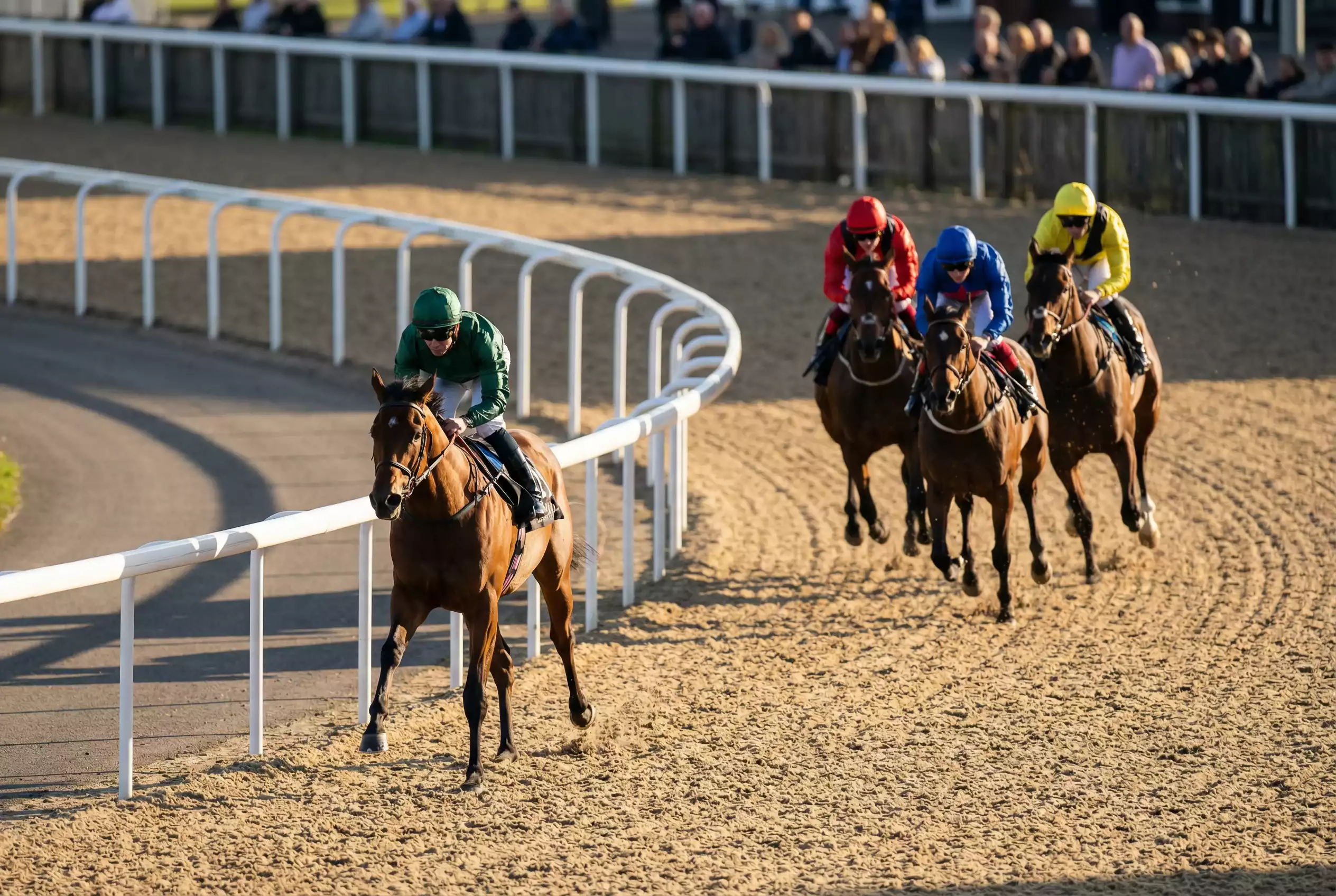
Southwell pace analysis begins with a principle that the At The Races course guide articulates as well as anyone: at this track, once others get away from you, you cannot get back to them. You need to be tactically astute and it frequently pays to be handy. That observation was written about the jumps course, but its logic applies across both the turf National Hunt track and the Tapeta all-weather oval. Southwell is a front-runner’s track — not exclusively, not at every distance, but persistently enough that any serious analysis of results here must account for where each horse was positioned during the race, not just where it finished. Southwell Pace Analysis — More on this topic at southwell race results.
The tight left-handed configuration, the short three-furlong home straight and the absence of sustained uphill gradients all conspire to make Southwell unfriendly to horses that race in rear and attempt to close late. Understanding when that bias holds, when it weakens and how to read a race’s likely tempo before the stalls open is the practical purpose of what follows.
AW Flat: Pace by Distance Breakdown
Over five furlongs on the straight course, pace is everything. The field breaks from the stalls and races flat out for roughly sixty seconds. There are no bends to slow the tempo, no tactical opportunities to sit and wait, and the three-furlong home straight is the entirety of the closing phase. Horses that miss the break are at an immediate disadvantage, and the data from the Tapeta era shows that runners who lead or race in the first two positions at the halfway point of a five-furlong race win at a higher rate than those who race from mid-division or further back. Late closers do occasionally win over five furlongs — but only when the early pace is exceptionally strong and the leaders burn themselves out before the line, which happens in perhaps one in five competitive sprints.
Over six furlongs, the left-handed bend in the first two furlongs introduces a brief deceleration as the field balances through the turn. This creates a momentary pause in the pace that benefits horses settling in third or fourth position. The front-runner advantage still exists at six furlongs, but it is less absolute than over five: the extra furlong gives hold-up horses more track to use, and the bend creates a window in which a well-ridden closer can organise itself before making a challenge. Prominent racing remains the dominant winning style at six furlongs, but patient rides from just off the pace are competitive — provided the jockey does not leave too much ground to make up entering the straight.
At seven furlongs and a mile, the pace profile becomes more conventional. Races start on the back straight, and the field has a longer run before hitting the home turn. The tempo in the early stages is typically steadier than in sprints, because the horses and jockeys are conserving energy for a finishing effort. At these distances, the front-runner advantage at Southwell narrows to a statistical lean rather than a structural dominance. Horses that race in the first three or four positions still win more often than closers, but the margin is smaller, and a well-timed run from mid-division — timed to hit the front inside the final furlong — is a viable and regularly successful strategy.
Over a mile and a quarter to a mile and six furlongs, pace becomes a tactical game rather than a raw speed contest. The longer distances involve at least one full circuit of the oval, and the pace in the early stages is often slow by the standards of shorter races. When the tempo is gentle, the leader can dictate and control the race from the front, saving energy for a sustained effort from the two-furlong pole. When the tempo is strong — usually because two or more runners contest the lead — the race opens up for closers, and the final positions are decided by which horse has the most left in reserve. Reading the likely pace scenario before the off, based on the declared runners’ previous running styles, is the single most productive piece of pre-race analysis at these distances.
NH Turf: How Heavy Going Shifts the Pace Dynamic
On the National Hunt turf course, pace analysis operates under a different set of rules. The obstacles — hurdles or fences — break up the rhythm of the race in ways that flat racing does not. Each jump requires the horse to adjust its stride, generate upward thrust and land without losing momentum. A front-runner that jumps fluently gains a length or two at every obstacle; one that fiddles or makes mistakes loses ground that is difficult to recover on Southwell’s tight circuit.
On good or good-to-soft ground, the NH pace dynamic resembles the Flat: speed and fluent jumping are rewarded, and front-runners that dictate the tempo hold an advantage. The portable fences at Southwell are stiff and demand precision, so a horse that meets them in stride can build a commanding lead by the time the field enters the home straight.
On soft or heavy ground, the equation inverts. The deeper, slower surface saps the energy of front-runners more quickly, and the physical effort of jumping on heavy ground is substantially greater than on a fast surface. Leaders that set a strong pace on heavy ground frequently tire from three fences out, and the race becomes a test of stamina and determination rather than speed and technique. Hold-up horses — particularly those with proven stamina on testing ground — come into their own in these conditions, often running past exhausted front-runners inside the final half-mile.
The going is therefore the primary variable in NH pace analysis at Southwell. The same horse, running the same race from the same position, can be a confident front-running selection on good ground and a doubtful one on heavy. Checking the going report and matching it to the horse’s record on equivalent ground is not a supplementary step — it is the first step, and everything else follows from it.
Practical Use: Identifying Likely Pace in Any Southwell Race
Predicting the pace of a race before the stalls open is not guesswork. It is a structured exercise that uses the declared runners’ recent form to estimate who will lead, who will sit in behind and how strongly the early tempo will be run.
The starting point is the field’s running-style profile. Most form databases and racecard services include a running-style indicator for each horse — typically coded as “led,” “prominent,” “mid-division,” “held up” or “rear.” Counting the number of horses in the field that habitually lead or race prominently gives you an immediate read on the likely pace scenario. If three or four horses all want to lead, the early pace will be strong, which creates opportunities for closers. If only one horse has a front-running style and the rest are held-up types, the tempo will be moderate, which strongly favours the sole leader.
The jockey booking adds nuance. Certain riders at Southwell are known for riding prominently — they put their mounts into forward positions regardless of the horse’s usual style. Others are patient, preferring to settle in mid-division and time a late challenge. Matching the jockey’s tendency to the horse’s preference reveals whether the combination is likely to race towards the front or sit further back than the bare form suggests. See also UK Horse Racing Attendance Trends.
Field size is the moderating factor. In small fields of five or six, the pace is almost always weak unless a confirmed front-runner is present, because there are not enough runners to generate sustained early pressure. In large fields of twelve or more, the pace is almost always strong, because the sheer number of runners creates competition for the lead even when no individual horse is a confirmed front-runner. The likely pace at Southwell is therefore a function of three inputs — the runners’ styles, the jockey tendencies and the field size — and combining these gives a reliable estimate that holds in the majority of races.
This estimate, in turn, feeds directly into selection decisions. If the pace is likely to be strong, look for closers with proven ability to finish fast. If the pace is likely to be weak, back the likely leader — or at least avoid opposing it. The edge is not in knowing the pace after the race; it is in knowing the pace before it and positioning your assessment accordingly.
