
 Available in US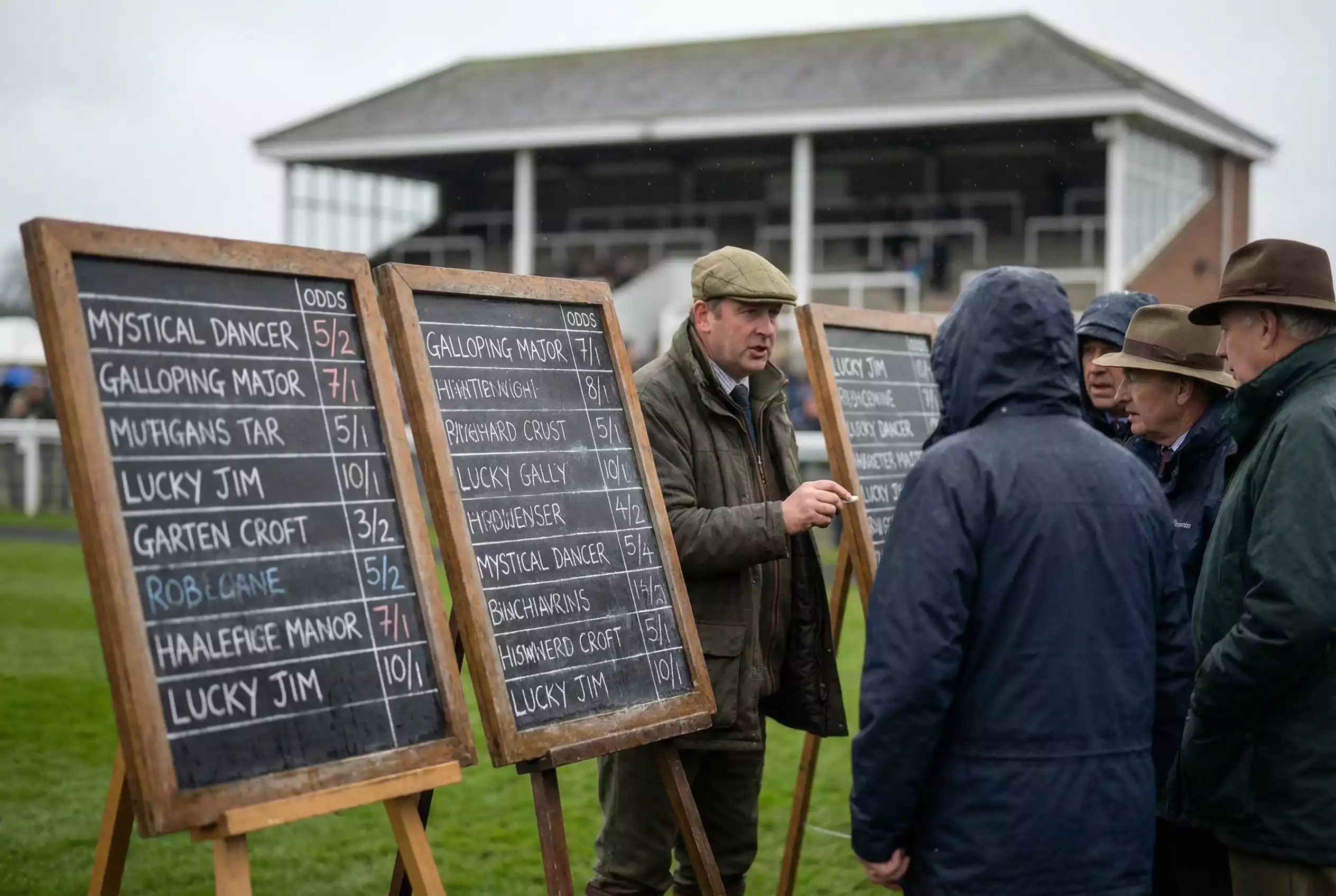
Betting on Southwell is a niche within a niche. The track does not host Group races, its cards are populated by Class 5 and 6 handicaps, and the prize money will not feature in any end-of-year financial review. But Southwell betting odds are set in the same markets as Ascot and Cheltenham, and the same principles of value, edge and discipline apply — with a few track-specific wrinkles that reward those who pay attention. Betting on Southwell Races — More on this topic at southwell race results.
Total betting turnover on British racing fell by 6.8 per cent in 2024 compared with the previous year, extending a multi-year decline driven by affordability checks, changing customer behaviour and competition from other sports and entertainment. Southwell is not immune to this trend. But lower turnover at the macro level does not mean lower opportunity at the individual-race level — in fact, thinner markets at a lower-profile venue can produce precisely the kind of pricing inefficiencies that informed punters are looking for.
Markets Available: Win, Each-Way, Forecast and Pools
Every Southwell race is covered by the full range of betting markets that British licensed operators are required to offer. The core markets are win and each-way, but the available options extend well beyond that.
Win betting is straightforward: you back a horse to finish first. At Southwell, win prices in competitive handicaps typically range from around 3/1 for the favourite to 25/1 or longer for outsiders, depending on the size and quality of the field. Favourites at Southwell win at roughly the same rate as at other all-weather venues — approximately thirty to thirty-five per cent of the time in handicaps — which means the majority of races are won by something other than the market leader. This basic arithmetic is the foundation of all value-seeking at the track: if the favourite loses more often than it wins, the profit opportunity lies in identifying which non-favourite is most likely to beat it, and at what price that selection represents genuine value rather than just hope.
Each-way betting pays out on the win and on a place — usually the first three in fields of eight or more runners, or the first two in smaller fields. At Southwell, each-way value often sits with horses in the 8/1 to 14/1 range that have shown consistent placed form at the track. A horse that finishes second or third regularly enough to return a profit on each-way stakes is worth more than one that wins occasionally at shorter prices but runs badly in between. The each-way market at Southwell rewards patience and reliability over spectacle.
Forecast and tricast markets — predicting the first two or first three in the correct order — are available on all Southwell races and can return significant multiples of the stake. These markets are inherently more volatile, and the edge required to make them profitable long-term is substantial. At Southwell, where lower-class handicaps regularly produce unexpected finishing orders, forecast betting is best treated as a supplementary rather than primary approach. The most productive use of forecasts at this track is in sprint races with a strong front-runner: if you are confident about the likely winner, combining it with two or three horses for second can produce returns that outstrip a simple win bet at short odds.
Pool betting through the Tote is also available. The Tote operates its own pool on every British race, and the dividend is determined by the total money in the pool rather than by fixed odds. On Southwell’s quieter meetings — midweek afternoons or evening cards — the Tote pool can be small, which means dividends are more volatile. Occasionally, this produces generous payouts on winners that the fixed-odds market priced more accurately. On other occasions, it produces disappointingly low returns on a winner that went off at a bigger fixed-odds price. Checking the Tote dividend after each race, and comparing it with the starting price, is a useful habit for anyone trying to identify systematic pricing differences between the two channels and decide which route offers better value at different times of the week.
Finding Value at Southwell: Track-Specific Angles
Value in betting is the gap between the actual probability of an outcome and the probability implied by the odds. At Southwell, several track-specific angles create recurring opportunities to exploit that gap.
The most robust angle is jockey profitability. According to OLBG’s five-year data, certain jockeys produce a positive level-stake profit at Southwell while others run at a steep loss. Kieran Shoemark, for example, shows a profit of +5.33 from forty-one winners, meaning that a one-point stake on every Shoemark ride at Southwell over the past five years would have returned a net gain. Conversely, some high-volume riders show deep negative returns, indicating that the market systematically overestimates their chances at this track. Filtering selections by jockey profitability is a blunt but effective first screen.
Trainer-condition filters add another layer. Specific trainer-age or trainer-race-type combinations at Southwell have produced strike rates well above the venue average — James Tate with four-year-olds, for instance, at forty-one per cent from seventeen runners. These sample sizes are small enough that they should not be trusted blindly, but they are large enough to suggest a real pattern rather than random noise. When a qualifying horse appears on the racecard, the filter flags it as warranting closer attention.
Draw and pace analysis, covered in detail elsewhere, provides a third source of edge. In sprint races, identifying the likely front-runner and assessing its draw relative to the field size gives a structural advantage that casual punters routinely ignore. In longer races, the pace angle becomes about field shape — how many runners want to lead, and what that means for those settling in behind.
No single angle is sufficient on its own. The edge at Southwell, as at any racecourse, comes from stacking multiple small advantages — jockey, trainer, draw, pace, going, form — until the combined weight of evidence produces a selection that the market has not fully priced. This is not glamorous work. It is spreadsheet work, database work and replay-watching work. But at a track that runs fifty-plus meetings a year, the volume of opportunities makes it worth the effort for anyone with the discipline to apply a consistent process rather than chasing hunches from one meeting to the next.
Responsible Gambling Notices
Betting on horse racing involves risk. No analytical method, however thorough, guarantees a profit, and the statistical advantages discussed in this article are measured over large sample sizes — hundreds or thousands of bets — not individual races. Short-term losing runs are a normal and expected part of even the most disciplined betting approach, and they can last longer than most people anticipate. See also Southwell Runners and Riders.
If you choose to bet, do so within a budget you can afford to lose entirely. Set deposit limits with your bookmaker before you start, not after a losing day. Use the self-exclusion tools that all UK-licensed operators are required to provide under Gambling Commission regulations. If betting is causing you stress, financial difficulty or relationship problems, organisations such as GambleAware provide free, confidential support and advice.
The information in this article is intended for educational and analytical purposes. It does not constitute financial advice or a recommendation to place any specific bet.
