
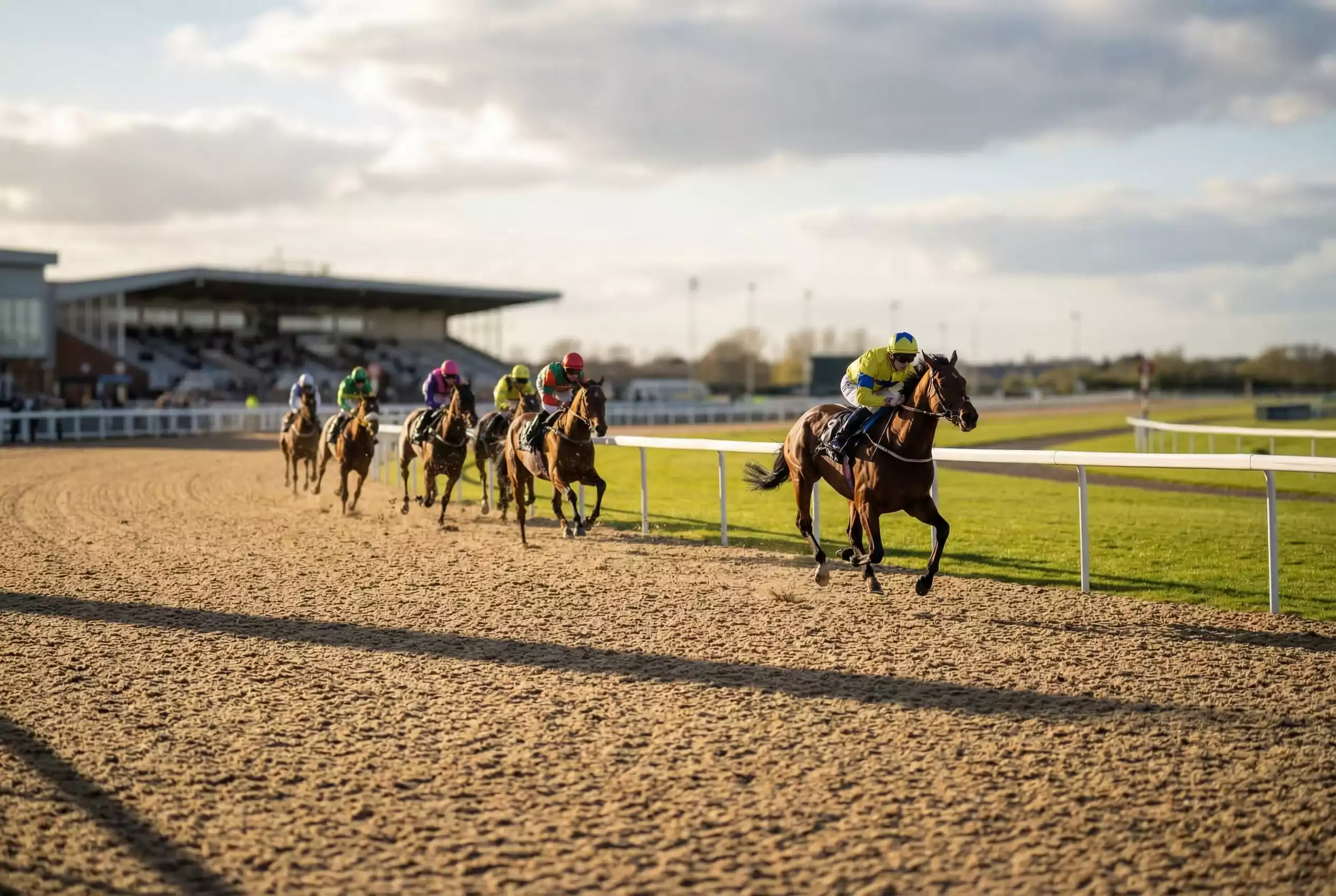
For thirty-two years, Southwell was the only racecourse in Britain where horses ran on Fibresand. It was the track’s defining characteristic — the thing that made form from Southwell almost useless everywhere else, and form from everywhere else almost useless at Southwell. Then, on 7 December 2021, the Winter Oaks Trial became the first race on a brand-new Tapeta surface, and an entire era of idiosyncratic results was consigned to the archives.
The Fibresand vs Tapeta divide at Southwell is not just a surface-science curiosity. It is the single most important variable when interpreting historical results at this track. Every speed figure recorded before December 2021 belongs to a different surface. Every course specialist from the Fibresand era earned that status under conditions that no longer exist. Understanding what changed — and what stayed the same — is essential for anyone using Southwell data seriously.
Southwell was the last racecourse in the UK to use Fibresand. When Arena Racing Company confirmed the switch, the old surface had been in operation since 1989, refurbished multiple times, and most recently patched with a £120,000 renovation of the back straight in 2016. By the time it was replaced, it had outlived every other Fibresand installation in professional racing.
What Fibresand Was and Why Horses Either Loved or Hated It
Fibresand was a blend of high-quality silica sand mixed with synthetic elastic fibres. The result was a deep, demanding surface that rode heavier than any other all-weather track in Britain. Horses sank into it. Kickback — loose material thrown into the faces of runners behind — was severe, sometimes comically so. After a competitive sprint, trailing runners would return to unsaddle caked in sand from head to tail.
The depth of the surface meant that stamina was the dominant factor in almost every race. A horse with raw speed but limited reserves would often die in the final furlong on Fibresand, caught by plodders that kept grinding through the deep ground. This created an unusual ecosystem: certain types of horse that struggled on Polytrack at Lingfield or Kempton would suddenly thrive at Southwell, and vice versa. The surface also drew frequent comparison to American dirt tracks, because the kickback and the physical demands were closer to what you would find at a US venue than anything in Britain.
Jockey David Probert, who rode extensively on both surfaces, described the old track bluntly: “Southwell was a unique all-weather track, mainly because of the deep fibresand surface they had there. On the fibre, it paid to be aggressive and go forward from the outset, but the new tapeta surface is a lot fairer.” That tactical reality — get to the front early or suffer — shaped decades of results. Front-runners with the stamina to sustain their effort held an exaggerated advantage. Hold-up horses frequently found themselves swallowing sand and running out of ground.
The result was a population of course specialists unlike anything seen at other venues. Horses such as Tempering, who won twenty-two races at Southwell and precisely one anywhere else in a hundred-and-twenty-seven career starts, embodied the Fibresand effect. If a horse handled the deep surface and the kickback, it could return again and again to a venue where its rivals were inherently disadvantaged. If it did not handle it, no amount of ability would compensate.
Trainers learned to target Southwell with specific profiles. Yards in the East Midlands with easy access to the track could give horses regular exposure to the surface, building up the muscular endurance needed to cope with it. Yards further away tended to send runners only when other options had been exhausted, which explains why local trainers historically dominated the statistics.
The Tapeta Composition and How It Rides Differently
Tapeta is a proprietary blend of silica sand, wax and recycled synthetic fibres, developed by former trainer Michael Dickinson and his partner Joan Wakefield. Unlike Fibresand, which relied on depth to create its character, Tapeta achieves consistency through binding: the wax coats the sand particles and holds the fibres together, producing a surface that is shallower, faster and dramatically less punishing on a horse’s legs. It had already been installed at Wolverhampton in 2014 and Newcastle in 2016 before arriving at Southwell.
The practical differences are stark. Kickback on Tapeta is minimal compared to Fibresand — a significant welfare and competitive improvement. Horses drawn wide or settled behind the pace no longer return covered in abrasive material. The going description on Tapeta at Southwell is almost always recorded as “Standard,” and the range of variation is far narrower than turf. Rain, which would make Fibresand even deeper and more gruelling, has a more limited effect on Tapeta, though it is not entirely immune to weather. The 2023 floods that hit Southwell badly enough to require a full surface refurbishment in 2024 proved that Tapeta has vulnerabilities — they are just different from the ones Fibresand had.
For jockeys, the Tapeta changed Southwell from a track where you needed to ride aggressively from the gates into one where more conventional tactics apply. Hold-up horses became viable again. Closers with a turn of foot could time their challenge without being blinded by sand. The result is a fairer test — which is exactly the word multiple riders have used since the switch.
From a form-analysis perspective, the key distinction is this: Fibresand results cannot be cross-referenced with Tapeta results as if they are the same surface. A horse that won three times on Fibresand at Southwell has not demonstrated it handles Tapeta. Conversely, a horse that never fired on the old surface might relish the new one. The 2021 switch effectively created a new track within the same Postcode.
Impact on Results: Speed, Stamina and Form Reversals
The most immediate change after the Tapeta installation was speed. Race times dropped across almost every distance. The surface is shallower, the going is quicker, and horses expend less energy simply staying upright. A race over a mile on Fibresand was a stamina test; the same distance on Tapeta plays much closer to what you would expect at Newcastle or Wolverhampton. Comparing sectional times from the two eras confirms what the results already suggested: the old surface slowed everything down by margins that made raw speed figures from the Fibresand period misleading if applied to Tapeta conditions.
Stamina remains relevant at Southwell — the left-handed oval with its tight bends is never going to ride like a galloping track — but it is no longer the overriding factor. On Tapeta, horses with a decent cruising speed and the tactical awareness to be positioned well entering the home straight have an advantage. The emphasis has shifted from raw endurance to the blend of speed and sustainability that characterises good all-weather form across the UK.
Form reversals were widespread in the months following the switch. Horses that had built up long winning records on Fibresand found themselves struggling on Tapeta, unable to deploy the attritional style that had served them so well on the deeper surface. Conversely, horses from yards that had avoided Southwell on Fibresand began appearing — and winning — on the new surface. Trainers such as John Gosden, who had sent only a handful of runners a year to the old Fibresand Southwell, publicly endorsed the Tapeta and signalled a willingness to use the track more regularly.
For punters, the practical takeaway is straightforward but important: treat pre-December 2021 Southwell form as belonging to a different venue. A horse described as a “course winner” at Southwell may have won all its races on a surface that no longer exists. The C&D tag still has value if the wins came on Tapeta, but Fibresand course form tells you almost nothing about how a horse will perform today.
The Fibresand vs Tapeta distinction at Southwell also has implications for breeding and purchasing decisions. Sires whose progeny excelled on the deep surface — often those with American dirt influence — are not guaranteed to produce the same results on Tapeta. Early data from the Tapeta era suggests that the track now rewards a more conventional European all-weather profile, though the sample size for breeding analysis remains relatively modest. What is certain is that the switch redrew the map, and anyone still relying on Fibresand-era assumptions at Southwell is working with outdated coordinates.