
 Available in US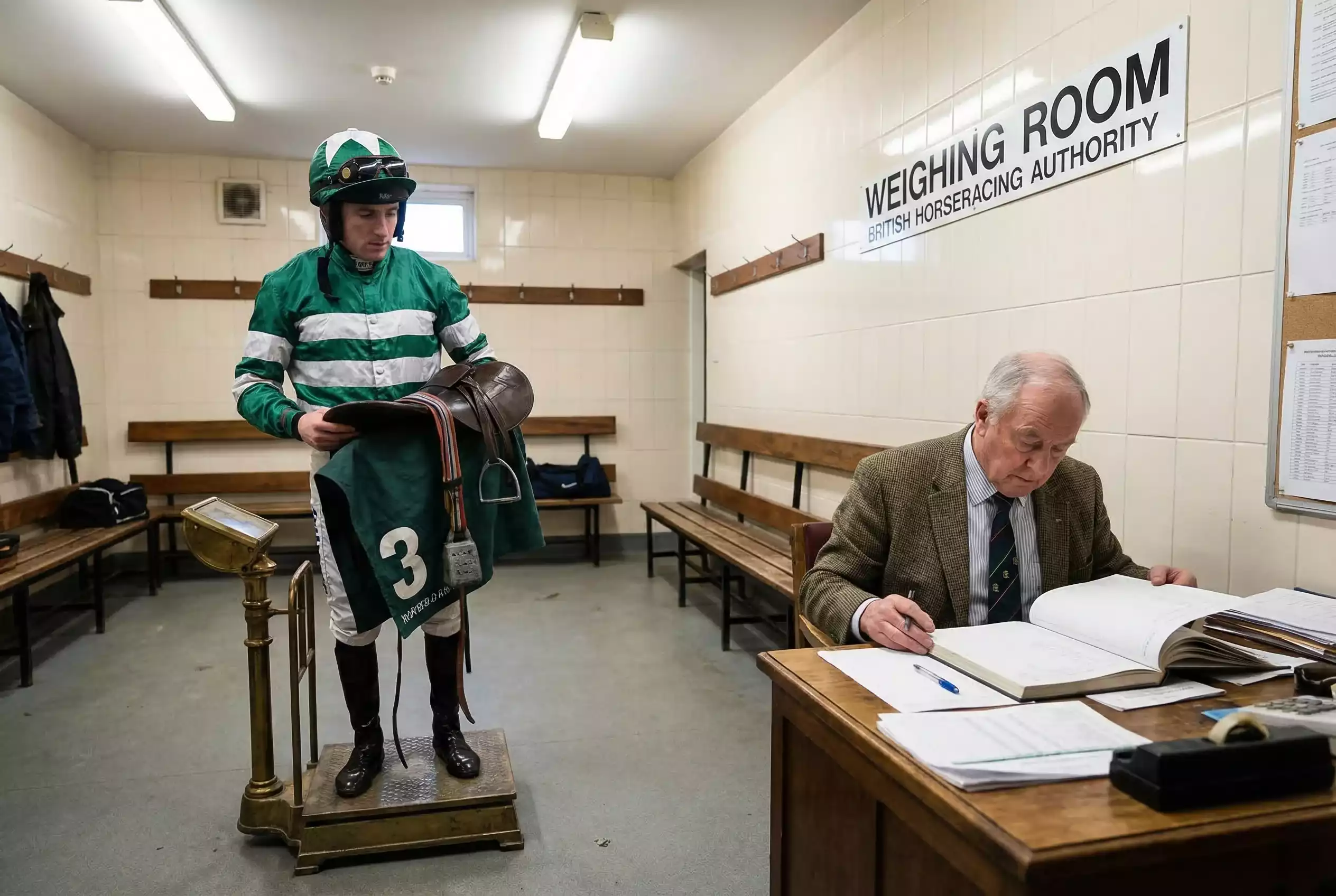
Handicap races are the most common race type at Southwell — and the most commonly misunderstood. The basic premise is simple: every horse carries a weight determined by its Official Rating, so that better horses carry more and weaker horses carry less. The aim is to equalise the field and produce a competitive race where any runner, in theory, has a chance. In practice, the system is more nuanced than that, and the punters who profit at Southwell’s all-weather handicaps tend to be the ones who understand the mechanics beneath the surface. Southwell Handicap Races — More on this topic at southwell race results.
Handicap races explained in detail requires an understanding of three connected components: how ratings are assigned, how those ratings translate into carried weights and how to spot the horses that the system has undervalued. At Southwell, where handicaps fill the majority of racecards throughout the year, these skills are not optional extras — they are the core toolkit.
The Handicapper’s Job: Assigning Ratings After Each Run
Every horse in British racing that has run in three or more qualifying races is assigned an Official Rating by the BHA’s team of handicappers. The rating is a number — typically between 0 and around 115 for horses at Southwell’s level — that represents the handicapper’s assessment of how good the horse is, expressed in pounds. A horse rated 75 is considered seven pounds better than one rated 68: in a handicap, the higher-rated horse would carry seven pounds more weight to compensate for the ability difference.
The rating is not static. After every run, the handicapper reviews the performance and adjusts the number accordingly. A horse that wins impressively will have its rating raised — often by three to seven pounds, depending on the margin and the quality of the race. A horse that finishes mid-division may see no change, or a reduction of one or two pounds if the handicapper judges it ran below its assessed ability. Over time, a horse’s rating is meant to converge on its true level: the point at which it is neither penalised for past brilliance nor rewarded for past failure.
The BHA’s full-year 2024 racing data illustrates the scale of this operation: 2,052 individual Flat horses achieved a performance figure of at least 85 during the year, up from 1,983 in 2023. In the Jump code, the equivalent threshold of 130 saw a decline from 787 to 716 horses. These numbers reflect both the size of the active racing population and the handicapper’s ongoing calibration of thousands of individual assessments.
At Southwell, where the same horses race frequently on the same surface, the handicapper has an unusually rich dataset to work with. A horse that runs at Southwell every three weeks is providing regular, comparable data points that allow the rating to be fine-tuned with greater accuracy than a horse that races sporadically at different venues. This means that the handicap marks at Southwell tend to be well-calibrated — which, paradoxically, makes it harder to find horses that are dramatically “well handicapped” but rewards those who can identify marginal advantages.
Weight Allocation: Turning Ratings Into Carried Pounds
Once ratings are assigned, the race conditions determine how those ratings translate into weight. In a standard handicap, the highest-rated horse in the race carries top weight — usually around 10st 0lb or 9st 12lb, depending on the conditions — and every other horse carries less, at a rate of one pound per rating point below the top weight.
For example, in a Class 6 handicap at Southwell with a top weight of 9st 12lb for a horse rated 62, a horse rated 55 would carry 9st 5lb — seven pounds less. If the jockey riding the lower-rated horse claims a further three-pound allowance (because they are an apprentice or conditional jockey with a claim), the actual carried weight drops to 9st 2lb, meaning the total advantage over the top weight is ten pounds. In a tight lower-class handicap, that difference can be enormous.
Weight is carried in the saddle cloth and added to the jockey’s own weight. Jockeys weigh out before the race and weigh in after, and any discrepancy beyond a small tolerance results in disqualification. The system is precise, audited and non-negotiable — which means the weight each horse carries is a fact, not an estimate, and can be used in analysis with confidence.
One subtlety that matters at Southwell: the weight range in a lower-class handicap is narrower than in a higher-class one. In a Class 2 handicap, the difference between top weight and bottom weight might be twenty-five pounds. In a Class 6 at Southwell, it might be twelve to fifteen pounds. A narrower weight range means a more compressed field in terms of assessed ability, which in turn means that non-ability factors — draw, jockey skill, fitness, surface preference — exert a proportionally greater influence on the result.
Spotting Well-Handicapped Runners at Southwell
A well-handicapped horse is one whose Official Rating underestimates its current ability. This can happen for several reasons: the horse has improved physically since its last run (maturity, fitness, wind surgery); it ran poorly in recent races due to circumstances unrelated to ability (poor draw, unsuitable going, bad luck in running); or it is making its first start on the all-weather after establishing its rating exclusively on turf, where different conditions may have suppressed its form.
At Southwell, the most productive sources of well-handicapped runners are horses dropping in class and horses switching from turf to the all-weather for the first time or after a long absence. A horse rated 70 that has been running in Class 4 handicaps at turf venues and finishing sixth or seventh may look exposed and declining. But if it has never raced on Tapeta, the rating was earned on a different surface against different opposition, and the reset to Southwell’s Class 5 or 6 level gives it a fresh context. If the surface suits, the drop in class can release improvement that the rating has not yet captured.
Another angle is the horse returning from a break. The handicapper cannot adjust a rating while a horse is off the track, so a horse that has been away for three months but has been working well at home may return to a mark that no longer reflects its fitness. At Southwell, where the all-weather calendar runs year-round, there is always a race available for a horse returning from a break, and trainers who time these comebacks well can land a handicap before the rating catches up.
The reverse is equally true. A horse that has just won at Southwell and been raised seven pounds is, in all likelihood, no longer well handicapped. The market tends to assume that a recent winner will repeat, but the handicapper has already adjusted the equation. Backing last-time-out winners at Southwell on their new, higher mark is a reliable way to lose money in the long run — unless there is specific evidence that the horse has more improvement in it than the rating rise implies. See also BHA Fixture List Changes 2024–2025.
Handicap analysis at Southwell is not about finding the hidden genius. It is about finding the horse whose rating lags a step behind its current condition, at a venue where small margins separate the first five finishers and a two-pound advantage in the weights can be the difference between winning and finishing third.
