
 Available in US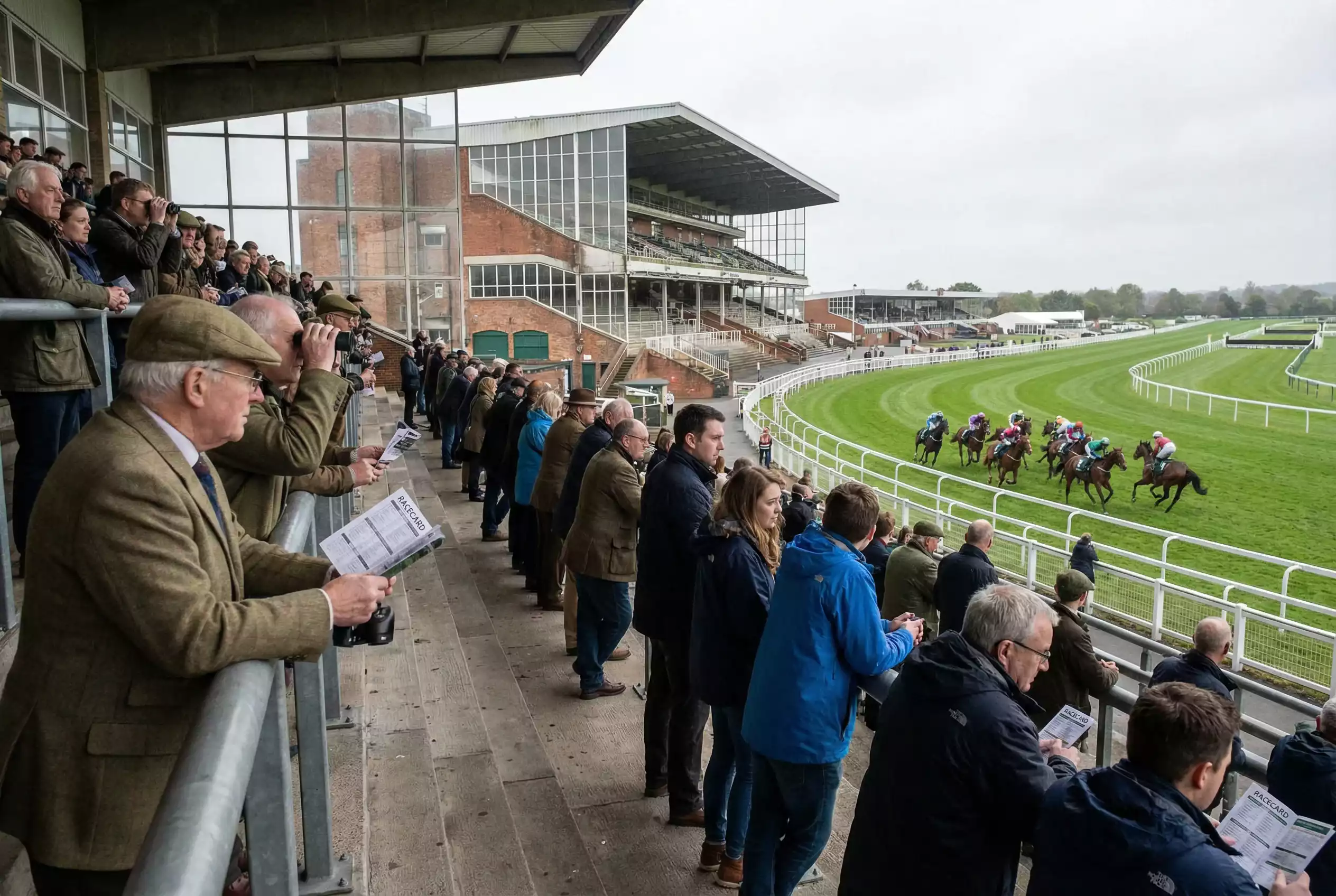
UK horse racing attendance is one of the few metrics that tells you whether the sport is growing, shrinking or merely rearranging the furniture. In the first half of 2024, more than 2.3 million people attended a British racecourse — a figure that sounds substantial until you compare it with the years before the pandemic, when the annual total regularly exceeded five million. The question for 2026 is not whether racing still draws crowds — it does — but whether the trajectory of those crowds is heading in a direction that supports the sport’s financial model or undermines it. UK Horse Racing Attendance Trends — More on this topic at southwell race results.
The answer, like most things in racing, depends on which number you look at and how you choose to frame it. The aggregate figures suggest decline. The per-fixture averages suggest modest growth. The truth sits somewhere between the two, and understanding the forces that are shaping attendance — from fixture-list reforms to affordability checks to weather — is essential for anyone trying to read the industry’s health through its turnstile data.
The Numbers: 2022 to 2024 Attendance Data
The post-pandemic recovery in racecourse attendance peaked in 2022, when approximately 4.8 million people attended racing events in Britain. That figure represented a strong bounce-back from the restricted-capacity seasons of 2020 and 2021, and it suggested that the public appetite for live racing had survived the enforced absence largely intact.
By 2024, the picture had shifted. Total attendances in the first eight months of the year came in at approximately 3.594 million — a decline of 2.3 per cent compared with the same period in 2023, according to BHA data published in September 2024. The absolute number was lower, but so was the number of fixtures staged: the 2024 fixture list contained 1,468 meetings, fewer than in previous years as a result of the BHA’s competitiveness trial. When you divide the total attendance by the number of fixtures, the average per meeting rose from 3,689 to 3,736 — an increase of 1.3 per cent.
This creates an interpretive fork. The optimistic reading is that racing is concentrating its audience into fewer, better meetings, which supports the logic behind the Premier Raceday concept and the fixture reductions. The pessimistic reading is that fewer fixtures mean fewer total racegoers, which reduces the sport’s aggregate economic footprint — the hospitality spend, the bar takings, the transport revenue and the broader local economic activity that surrounds a race meeting.
Both readings are supported by the data. The BHA has publicly endorsed the per-fixture interpretation, arguing that the modest increase in average attendance is evidence that the fixture-list reforms are directing audiences towards meetings that offer a better experience. Critics point to the aggregate decline and note that the lost fixtures represent real economic activity that has been removed from host communities — a concern that is particularly relevant for smaller venues like Southwell, where a cancelled meeting is a lost day of revenue for local hotels, pubs and transport operators.
What’s Driving Changes: Affordability Checks, Weather and Fixture Cuts
The attendance trend cannot be understood in isolation from the broader commercial pressures on British racing. Three factors are particularly relevant.
The first is the introduction of financial affordability checks by licensed bookmakers, mandated by the Gambling Commission as part of the Gambling Act White Paper reforms. Since August 2024, operators have been required to investigate customers depositing more than £500 within a thirty-day period to assess financial vulnerability. The threshold was lowered to £150 from February 2025. These checks have reduced betting activity — total turnover on British racing fell by 6.8 per cent in 2024 — and there is a plausible, though not yet proven, link between reduced betting engagement and reduced racecourse attendance. If casual punters are betting less frequently, they may also be attending less frequently, since for many racegoers the betting experience is inseparable from the live event.
The second factor is weather. The first quarter of 2024 was one of the wettest on record, with persistent rain causing fixture abandonments across the National Hunt programme and deterring casual racegoers from venues that lacked cover. Weather is a perennial variable in British racing and should not be over-weighted in trend analysis, but it does affect individual seasons and can distort year-on-year comparisons.
The third factor is the fixture-list reductions themselves. Fewer meetings mean fewer opportunities for the public to attend. The BHA’s argument is that the remaining meetings are of higher quality and therefore more attractive, but this assumes that quality is the primary driver of attendance — an assumption that does not hold uniformly across all venues. At a flagship meeting like Royal Ascot or the Cheltenham Festival, quality matters enormously. At a midweek all-weather card at Southwell, convenience, habit and proximity may matter more. Removing a fixture from the calendar does not automatically redirect those potential racegoers to a different, higher-quality meeting; some of them simply stay home.
Where Southwell Fits in the National Picture
Southwell does not publish individual attendance figures, so its contribution to the national total must be inferred from context. The track stages over fifty fixtures a year, predominantly midweek all-weather cards and evening meetings, which attract smaller crowds than weekend turf meetings at higher-profile venues. A typical Southwell raceday draws a local and regional audience — the committed racing regulars of Nottinghamshire and the surrounding counties — rather than the national audience that converges on Cheltenham or Aintree.
The economic contribution of this regular, smaller-scale attendance should not be underestimated. British racing as a whole generates an annual economic impact of £4.1 billion and supports approximately 85,000 jobs, including more than 20,000 directly at licensed racecourses. Southwell’s share of those numbers is modest in individual terms, but the venue’s role in the ecosystem is structural: it provides year-round racing content that keeps the betting and broadcasting supply chain operating through the winter, which in turn supports the Levy income that funds prize money and integrity services across the entire sport.
For Southwell specifically, the attendance trends are shaped by the same forces as the national picture — affordability checks, weather, fixture cuts — but filtered through the venue’s particular character. The all-weather programme is less weather-sensitive than turf, which insulates Southwell from some of the abandonment-related attendance losses that hit other tracks. The evening meetings under LED floodlights provide an alternative to afternoon racing that appeals to a working-age audience. And the proximity of Rolleston station to the racecourse reduces the logistical friction of attending, which helps maintain footfall even on less appealing midweek cards. See also Southwell Ladies Day & Feature Events.
Whether Southwell’s attendance is rising or falling in absolute terms is unknowable from publicly available data. What is clear is that the track’s commercial model is less dependent on gate receipts than on media-rights income and Levy-funded prize money. As long as those revenue streams hold, Southwell can sustain its programme regardless of whether the grandstand is half-full or three-quarters full on a Tuesday evening. The attendance numbers matter, but they are not the number that keeps the lights on — that role belongs to the betting turnover that generates the Levy, and it is the turnover trend, not the attendance trend, that most directly determines the future of racing at venues like this one.
