
 Available in US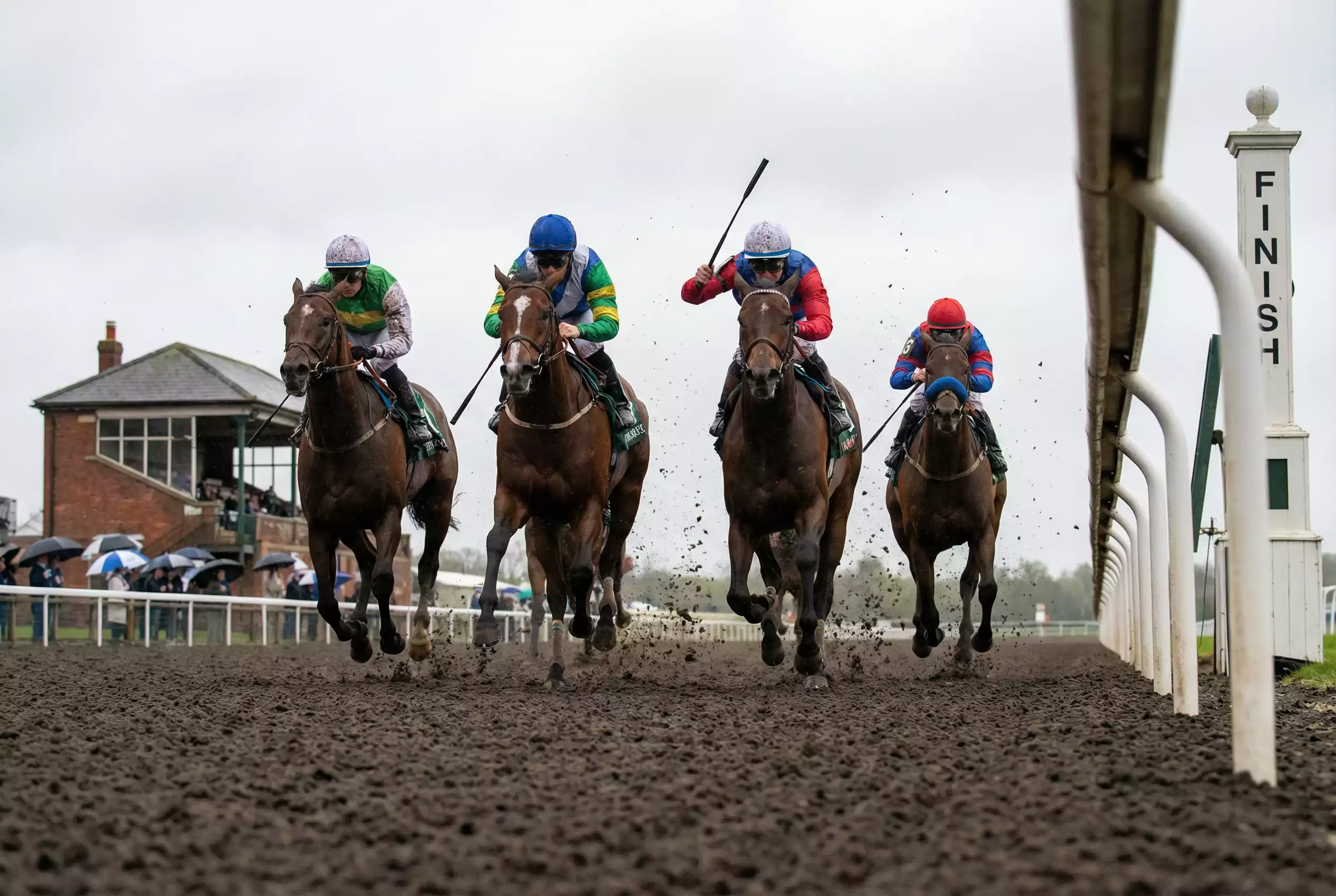
Sprint racing at Southwell occupies a specific niche in the all-weather calendar. The five-furlong straight course and the six-furlong round-course route produce distinct race dynamics, different draw influences and different types of winners. Southwell sprint results reward close attention to detail — particularly to stall position, early pace and the mechanical differences between the two distances — in ways that longer races at this track do not. Southwell Sprint Results — More on this topic at southwell race results.
The Tapeta surface has altered sprint form at Southwell significantly since December 2021. On the old Fibresand, sprints were stamina-sapping affairs where even five furlongs could catch out horses with limited reserves. On Tapeta, the emphasis is closer to genuine speed, though the tight left-handed bends still catch out anything that cannot handle the geometry. What follows is a distance-by-distance breakdown of what matters in Southwell’s shortest races.
The Straight 5f Course: Start Position and Characteristics
Five-furlong races at Southwell are run on a dedicated straight course — a spur that feeds into the main oval from the north end of the track and joins the home straight approximately where the round-course runners enter the final three furlongs. The start is at the far end of the spur, and the stalls are positioned across the width of the track rather than on a bend.
This matters because the five-furlong course at Southwell is one of only two straight all-weather sprints available in Britain, the other being Newcastle’s one-mile straight which also accommodates shorter races. The straight configuration removes the bend variable entirely: there is no inside rail advantage from saving ground, and no wide-draw penalty from covering extra distance. In theory, every stall should be equal. In practice, the slight off-centre angle at which the spur meets the home straight can create a marginal preference for higher draws in larger fields, where congestion on the inside pushes those drawn wide into a cleaner racing line.
The five-furlong trip on Tapeta is a genuine speed test. From the stalls, the field accelerates flat out and the first two furlongs typically separate the quick-starting specialists from the rest. Jockeys riding five-furlong specialists at Southwell know that the first hundred yards out of the stalls are critical: a horse that misses the break by even half a length may never recover the deficit. The home straight is flat and the run to the line is uninterrupted by bends, so late rallies do happen — but only when the pace is genuinely strong and the leaders have overcooked the early fractions.
In smaller fields — six runners or fewer — the pace dynamic changes. Without the pressure of multiple horses vying for the lead, a sharp-breaking front-runner can control the tempo and coast to the line. These races often produce shorter winning distances because the leader is never put under serious pressure until deep inside the final furlong. For punters, small-field five-furlong races at Southwell are among the most tactically transparent on the all-weather circuit: identify the likely leader, check its stall position and jockey booking, and decide whether anything in behind has the raw speed to reel it in.
6f on the Round Course: How the Bend Changes Things
Six-furlong races at Southwell start on the round course, which means the field negotiates a left-handed bend within the first two furlongs before entering the back straight and then the home straight. This single bend transforms the race dynamics compared with the straight five furlongs.
The draw reasserts itself over six furlongs. Horses drawn low start closest to the inside rail and can save ground through the bend without being shuffled back. Horses drawn wide must either burn energy to cross over to the inside or accept racing wider and covering extra distance. On Tapeta, where the surface provides consistent grip across the track width, the wide-draw penalty is not as severe as it would be on a turf course with variable ground — but it still exists. In competitive six-furlong handicaps with ten or more runners, a low draw is a tangible advantage.
The bend also changes the pace profile. Six-furlong runners at Southwell cannot maintain the all-out gallop that five-furlong specialists use because they need to balance through the turn. The deceleration is brief but real, and it allows mid-division horses a moment to organise themselves before the pace lifts again on the straight. This makes the six-furlong distance marginally more forgiving for horses that need a furlong to find their stride — the type that would be in trouble over five furlongs but can use the bend to get into rhythm.
Winning times over six furlongs at Southwell on Tapeta typically fall in the range of 1:11 to 1:15, depending on the going and the quality of the field. On the old Fibresand, the same distance was several seconds slower, reflecting the deeper, more demanding surface. These quicker times mean that the margin for error is tighter: a jockey who sits too far back through the bend may find that the leaders have established an unassailable gap by the time the field straightens up. Prominent racing is the default approach over six furlongs at Southwell, and the results data from the Tapeta era supports that.
Sprint Specialists: Jockeys and Trainers to Watch
Sprint results at Southwell are shaped disproportionately by a small number of jockeys and trainers who understand the track’s specific demands. According to OLBG’s five-year statistics, the most profitable jockey at Southwell overall is Kieran Shoemark, with forty-one winners and a level-stake profit of +5.33. While Shoemark’s record is not sprint-specific, the underlying skill set — quick reactions from the stalls, the ability to judge pace on a tight track and the discipline to hold a position through the bend — translates directly to the short distances.
Jason Hart leads the overall winners table at Southwell with fifty-eight victories, though his level-stake profit is negative. Hart’s volume means he rides across all distances and classes, and his sprint record specifically is characterised by consistency rather than spectacular profitability. He is the type of jockey who will rarely let you down but equally rarely provide a major overpriced winner — the reliable pilot that trainers book for competitive handicaps rather than speculative outsiders.
Among trainers, the sprint programme at Southwell attracts a mix of local Midlands-based operations and larger northern yards. Trainers with multiple all-weather runners tend to target Southwell’s sprints when they have a horse that appreciates the Tapeta and fits the class level. The profitable angles identified in the broader Southwell data — such as James Tate with four-year-olds, showing a forty-one per cent strike rate — can apply to sprint-distance runners as well, though the sample sizes for trainer performance filtered by both venue and distance are inevitably small. See also Southwell Racecourse History.
For anyone building a sprint model at Southwell, the most reliable inputs are: recent course-and-distance form on Tapeta, stall position relative to field size, the jockey’s comfort with the track and the horse’s early speed rating from its most recent outing. Going conditions are less of a variable in sprints than they are over longer distances — on Tapeta, the surface rarely moves far from Standard — but they are not irrelevant, and a shift to Standard-to-Slow can add a second or more to finishing times, which is enough to change the finishing order.
