
 Available in US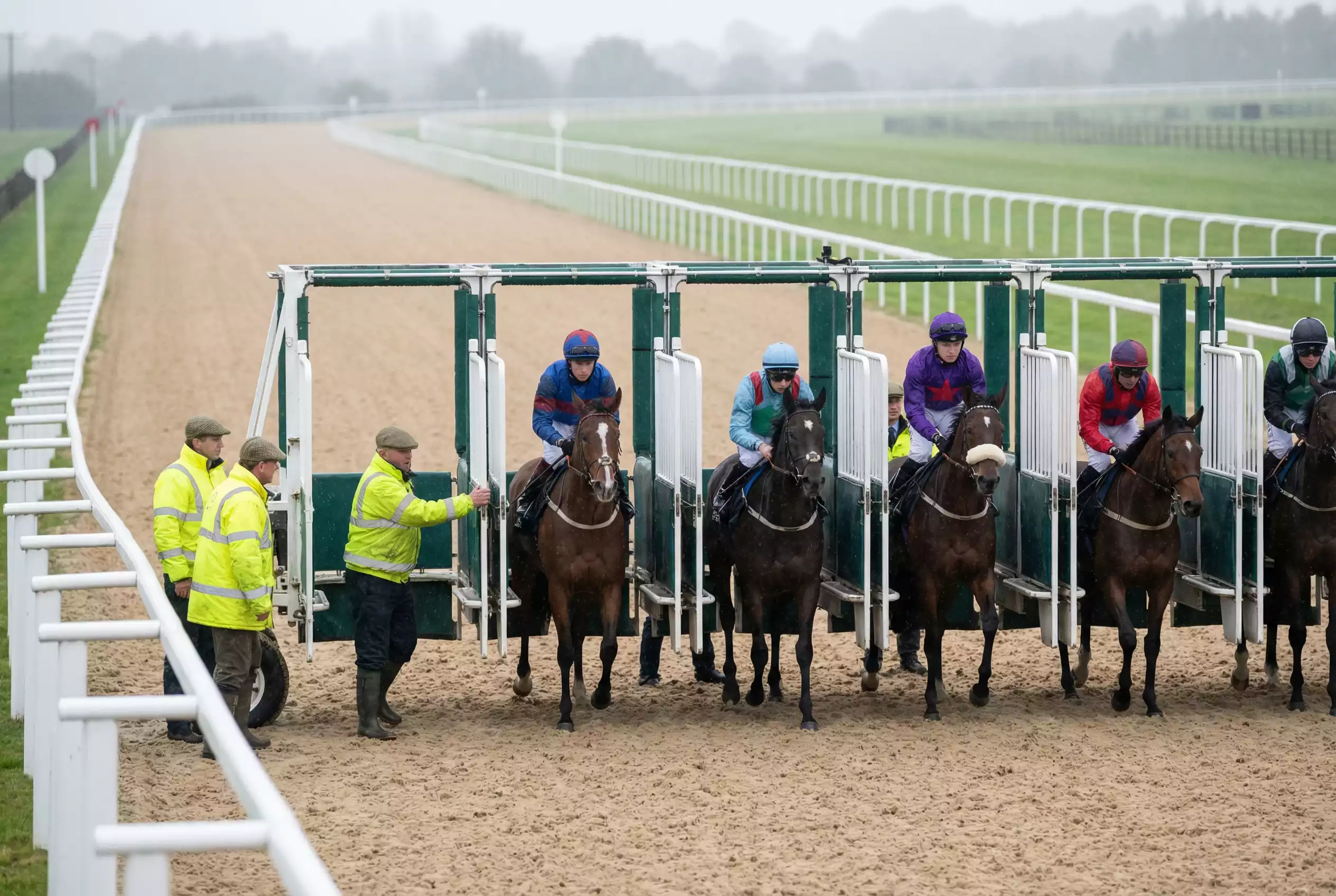
Every racecourse has biases. Some favour certain draw positions. Some reward front-runners disproportionately. Some penalise horses that race on a particular part of the track. Southwell track bias on Tapeta is a subject that divides opinion among form analysts — partly because the surface switch in 2021 invalidated decades of Fibresand-era data, and partly because the Tapeta has been specifically designed to minimise the kind of structural unfairness that plagued the old track. Southwell Track Bias — More on this topic at southwell race results.
That does not mean the biases have vanished entirely. It means they are subtler, more conditional and harder to detect without separating the data carefully by distance, field size and going. What follows is a practical examination of what the numbers show — and where an edge might still exist for those prepared to look closely at Southwell’s draw, pace and rail-position patterns.
Draw Bias by Distance: What the Numbers Say
Draw bias at Southwell depends almost entirely on which part of the track a race uses. The key distinction is between the straight five-furlong course and the round course used for everything from six furlongs upwards.
Over five furlongs on the straight course, the draw has historically been one of the most discussed variables at Southwell. The spur runs roughly north-to-south and feeds into the home straight from a slightly off-centre angle. In larger fields — those with ten or more runners — higher draws have shown a marginal advantage in recent seasons, possibly because the racing line from a wider gate allows a cleaner run towards the far rail without being caught up in early congestion on the inside. In smaller fields, the bias largely disappears, because there is less traffic and every runner has room to find a comfortable position.
Over six furlongs, the round course introduces a left-handed bend within the first two furlongs. Horses drawn low start closer to the inside rail and can save ground through the turn, while those drawn wide need to cover extra distance. This creates a mild but measurable low-draw advantage in six-furlong races, particularly when the pace is steady and there is no tactical incentive to go wide. When the pace is strong and the field fans out around the bend, the advantage diminishes.
At seven furlongs and a mile, the race starts on the back straight and includes at least one full bend. The draw bias at these distances is minimal on Tapeta. The surface provides even grip across the width of the track, which means that inside, middle and outside running lines all offer comparable traction. In contrast to turf tracks where the going can vary significantly between the inside rail and a wider path, the Tapeta at Southwell — particularly since the 2024 refurbishment — presents a largely uniform surface from one side to the other.
At middle distances of a mile and two furlongs to a mile and six furlongs, the draw has negligible impact. By the time the field has negotiated the first bend and settled into position, the stalls have long ceased to matter. Position in the race at that point is determined by pace and tactics, not by the number printed on the racecard.
The practical takeaway: draw bias at Southwell is real but narrow, affecting sprints more than any other distance. In five-furlong races with double-figure fields, a wide draw is not a disadvantage and may be a slight positive. In six-furlong races, a low draw helps. Beyond that, other factors — form, jockey, going — matter more than the draw stall. See also Southwell National Hunt Results.
Pace Bias: Does Front-Running Pay on Tapeta?
If the draw affects where a horse starts, pace bias affects how the race itself unfolds — and at Southwell, the running style question has always loomed larger than the stall number. On Fibresand, front-running was not just an advantage — it was close to a requirement. The deep, heavy surface punished horses trying to close from behind, and the severe kickback made it physically unpleasant to track the leaders. The At The Races course guide for the jumps track captures a principle that applied equally on the old all-weather surface: at Southwell, once others get away from you, you cannot get back to them. You need to be tactically astute and it frequently pays to be handy.
On Tapeta, that dynamic has softened considerably. The reduced kickback means that hold-up horses can sit behind the pace without being sand-blasted, and the faster surface means that a well-timed late run can carry a horse from fourth or fifth to the front inside the final furlong. Front-runners still have an advantage at Southwell — the tight configuration and relatively short home straight of three furlongs means that leaders are never far from the finish — but the advantage is no longer overwhelming.
The data from the Tapeta era suggests that prominently ridden horses — those racing in the first three positions for the majority of the race — win at a higher rate than closers across most distances at Southwell. The bias is most pronounced in sprints over five and six furlongs, where there is simply not enough track for a slow starter to make up lost ground. At a mile and beyond, the pace bias weakens, and horses ridden patiently from mid-division or further back produce competitive strike rates.
One variable that shifts the pace dynamic is field size. In small fields of five or six runners, the pace is often modest, and a horse that breaks well and controls the tempo from the front can dictate the race unchallenged. In larger fields, the pace is usually stronger because more runners contest the early lead, which burns energy and opens the door for closers. If you are assessing the likely pace scenario of a Southwell race, the number of declared runners is the first thing to consider — before you even look at running styles.
Has the Tapeta Removed the Old Fibresand Biases?
For thirty-two years, Southwell’s Fibresand surface carried a set of biases so pronounced that they defined the track’s identity. Front-runners dominated. Low draws were a disadvantage in sprints because the kickback from the inside rail was worst in the early strides. Horses with stamina could grind down faster rivals on the deep ground. These were not marginal tendencies — they were structural features of the surface, and any serious form analyst factored them in as a matter of routine.
The switch to Tapeta has eliminated most of those biases. The kickback issue is gone, which removes the single biggest reason that low draws were problematic on Fibresand. The front-runner advantage, while still present, has been reduced from a near-certainty to a statistical lean. The stamina premium has been replaced by a more conventional all-weather profile in which speed and efficiency matter as much as endurance.
What Tapeta has introduced, however, is its own set of subtleties. The surface drains differently from Fibresand, which means that prolonged rain can change the going description from Standard to Standard-to-Slow — something that never happened on the old track in quite the same way. The 2023 floods demonstrated that extreme weather can compromise the surface entirely, and the subsequent refurbishment in 2024 means the current Tapeta is effectively a second iteration, with potentially different riding characteristics from the original 2021 installation.
The honest assessment is that Southwell on Tapeta is a fairer track than Southwell on Fibresand. The biases are less pronounced, more conditional and more responsive to variables like field size and going than the old surface’s blunt favouritism towards front-runners on deep ground. That makes the track harder to exploit through bias alone — but also more rewarding for those who integrate draw, pace and surface data into a broader form analysis rather than relying on a single shortcut. The old rules are dead. The new ones require more nuance, but they are no less useful to anyone willing to learn them.
